Executive Summary
A regional utility company needed to perform emergency repairs on a critical underground power line. The repair site was located across a section of protected wetland with soft, unstable ground. Using traditional methods would have caused significant environmental damage and incurred high restoration costs. The company used temporary ground protection mats to create access roads and work platforms. This solution prevented environmental damage and reduced restoration costs by 90% compared to previous similar projects.
The Challenge
The utility company identified a fault in an underground cable that supplied power to essential services. The repair location was in an environmentally sensitive area. The ground was soft peat soil with vulnerable vegetation. The repair required the use of heavy equipment: a tracked excavator and multiple support vehicles.
The traditional approach would involve using gravel to create a temporary road. This method has proven problematic. Gravel sinks into soft ground. It causes rutting and soil compaction. It damages root systems. It requires extensive site rehabilitation after the project. For this wetland site, the restoration costs were projected to be substantial. The company needed a solution that would provide stable access for heavy equipment while protecting the ground surface.
The Solution
The project manager selected interlocking ground protection mats.
-
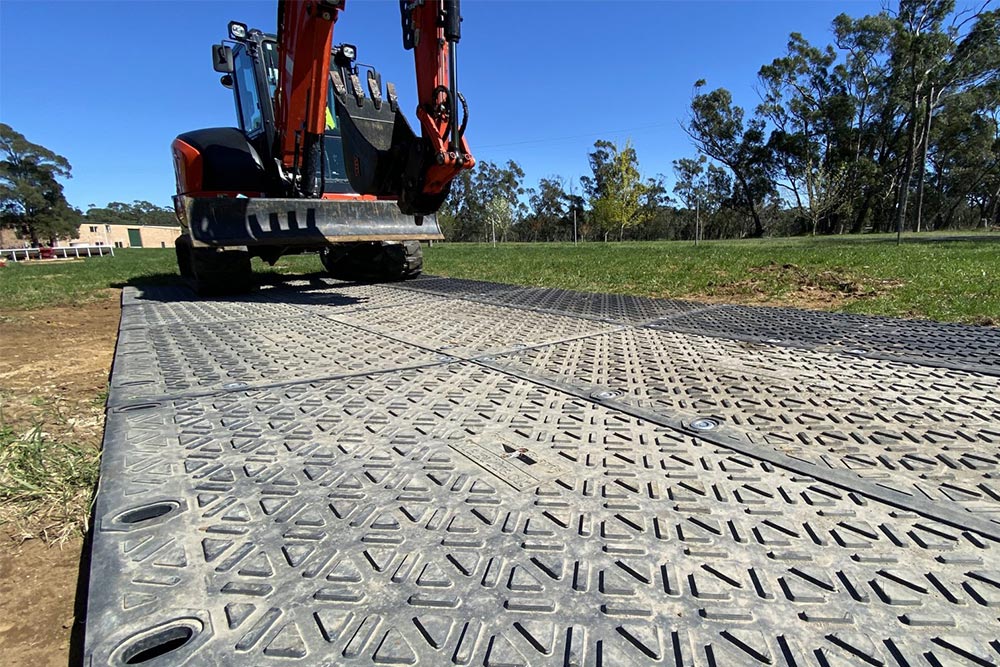
Product Specification: The mats were made from high-strength composite material. Each mat measured 8 feet by 4 feet. They featured a interlocking mechanism on all four sides. The surface had a heavy-duty grip pattern.
-
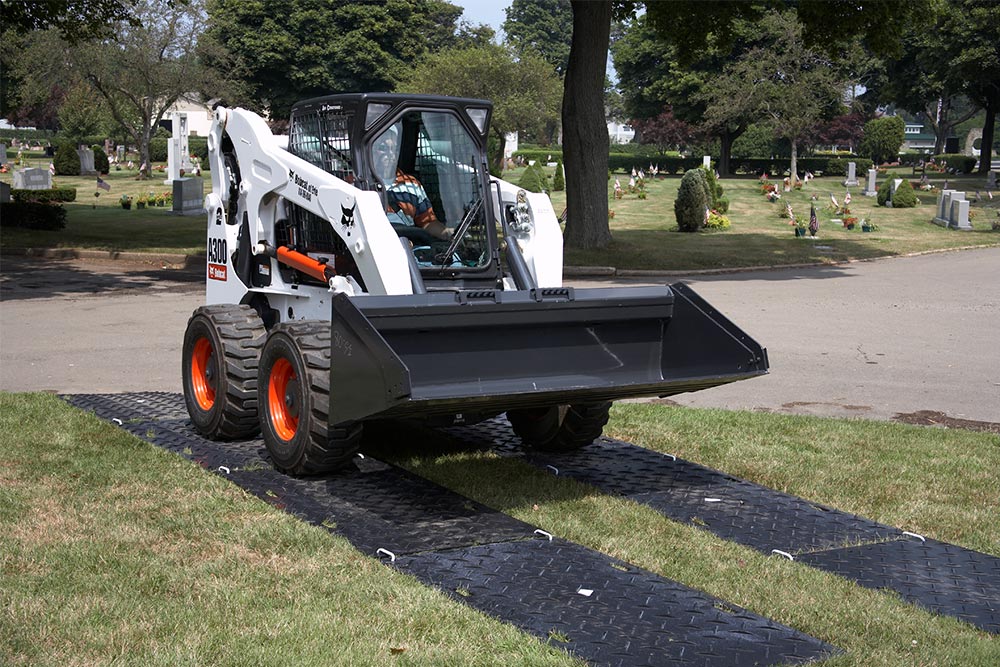
Application: The mats were used to create two main structures: a 200-foot access road for vehicle transport and a 400-square foot work platform around the excavation site.
-
Implementation: A crew of four installed the mat system in five hours. The interlocking design required no tools. The mats were placed directly on the unstable ground. They created a stable, unified surface that distributed the load of the heavy machinery.
Implementation
The installation process was straightforward. The crew first laid the access road, allowing the excavator and other vehicles to reach the site without driving on the bare ground. They then created a large work platform around the exact repair location. This gave the excavator a solid base from which to operate.
The repair work lasted for three days. During this period, the equipment operated entirely on the matting system. The mats successfully distributed the concentrated loads from the excavator tracks and vehicle tires. At the end of the project, the crew removed the mats. The disassembly process took three hours. The mats were loaded onto a truck and transported to the next job site.
Results and Cost Analysis
The results were measured by comparing the final site condition and costs with historical data from a similar project in a comparable environment.
-
Site Restoration Costs:
-
Previous Project (Using Gravel): The total cost for site restoration was $15,000. This included removing contaminated gravel, re-grading the land, importing new topsoil, and replanting native vegetation.
-
This Project (Using Mats): The total cost for site restoration was $1,500. The only work required was a light raking of the leaf litter that had settled on the protected ground. The vegetation underneath the mats was intact and healthy.
-
-
Cost Savings: The use of mats resulted in a direct cost saving of $13,500, representing a 90% reduction in restoration expenses. The rental cost for the mats was $2,000. Therefore, the net saving for the project was $11,500.
-
Additional Benefits:
-
Time Savings: The project timeline was shorter. Mat installation and removal were faster than transporting and spreading gravel. There was no time spent on complex site rehabilitation.
-
Environmental Compliance: The solution ensured full compliance with environmental regulations. The company avoided potential fines and preserved its license to operate in sensitive areas.
-
Equipment Efficiency: The stable work platform allowed the excavator to operate at maximum efficiency, completing the repair work faster.
-
Conclusion
For the utility company, the temporary ground protection mats were a decisive cost-saving solution. They provided the necessary strength for heavy equipment while completely protecting the underlying environment. The 90% reduction in restoration costs demonstrates a clear financial benefit. This case establishes a new standard for infrastructure repairs in ecologically sensitive areas, proving that operational efficiency and environmental stewardship can be achieved simultaneously. The company has since integrated ground protection mats into its standard operating procedures for all similar projects.